Ex Libris Museum: 25 Years of Oblivion
One of the significant dates in my biography is February 10. Twenty-five years ago, on that day, the first ex libris museum in the former Soviet Union was born in Chișinău. Recently, while sorting through papers related to this event, I thought with poignant regret that a major and necessary undertaking, which had begun so well, unfortunately did not develop any further.
The creation of the museum was preceded by a long and labor-intensive journey; the ground for it had been prepared painstakingly.
About forty years ago, small-format graphic art began to “recruit” supporters among young Moldavian artists. This development may have been somewhat belated for a European country, but it was entirely timely under our conditions; it was only then that a printing infrastructure and artists working in easel and small-format graphics had begun to emerge.
By that time, the ex libris, as a phenomenon of small-format graphic art, represented a fairly popular field.
As early as the mid-1960s, a group of adherents working in this field emerged among Moldavian artists. But the ground was not yet ready for major success. Good graphic artists who illustrated books (I. Bogdesco, L. Grigorashchenko, L. Belyaev, A. Usov, and others) were not particularly interested in ex libris, whereas the younger generation of artists showed a genuine interest in them. They gradually rose from an amateur to a professional level, and when this new field had grown sufficiently in both quantitative and qualitative terms, it became necessary to announce its existence.
The first mention of Moldavian ex libris was made at the 175th meeting of the Moscow Ex Libris Club on November 29, 1973, in a report by Ya. L. Beilinson:
“Unfortunately, the Moldavian bookplate has not yet developed as extensively as it has, for example, in Ukraine or Belarus. But even what has been accomplished demonstrates the great potential of artists of the Moldavian SSR for creative achievements in this field. We may hope that in the coming years we shall witness the flourishing of the bookplate in Moldavia.”
In 1976, the first Republican Exhibition of Moldavian Ex Libris was held, at which approximately fifty artists and students working in the field of the bookplate were represented.
At that time, I was deputy chairman of the Small-Format Graphics and Ex Libris Section of the Moldavian branch of the All-Union Society of Book Lovers, and after this exhibition I headed the section until 1989.
I still have the completed catalog layout for that first exhibition, which we were unable to publish at the time, despite the fact that the exhibition was held under the auspices of the State Publishing Committee and the republic’s Society of Book Lovers.
The existence of the new field of graphic art was established in 1981 with the publication of the first book, “Contemporary Moldavian Ex Libris.”
I was deeply engrossed in this activity. Work in the section and small-format graphic art captivated me completely.
In the 1980s, the design of Moldavian books enjoyed well-deserved popularity. Books illustrated by Moldavian artists received numerous awards at All-Union and international competitions, and about 40 artists were already engaged in creating ex libris.
Baltic artists were considered the leaders of this field in the former USSR, so our graphic artists sought recognition in the arena of small-format graphic art specifically in the Baltic republics. Each time, one guest from a Union republic, selected by a professional organizing committee, was invited to participate in the Baltic Ex Libris Biennale. In 1983, I became that guest. This was the first major appearance of Moldavian ex libris outside our Republic.
The next landmark event in the history of Moldavia’s cultural development, following the publication of the book on Moldavian ex libris, may be considered the exhibition of Moldavian bookplates held in Tallinn in 1982. To this day, I preserve posters, notices, and magazines containing publications devoted to that event, when three artists from Moldova-Petru Vlah, Vladimir Sheiko, and yours truly-secured a breakthrough for the Moldavian bookplate beyond the republic’s borders.
This was followed by an exhibition in Latvia, and after a short interval the exhibition moved to Lithuania. I began representing and popularizing the works of Moldavian artists at various exhibitions outside our republic.
The Society of Book Lovers, which actively promoted ex libris, issued a series of booklets featuring works by Moldavian artists: “The Art of Moldavian Ex Libris” and “The Art of the Moldavian Book.” The two-volume miniature edition (measuring up to 10 cm), “Masters of Ex Libris” and “Masters of Moldavian Book Graphics,” remains in demand among collectors to this day.
I designed all these materials with immense pleasure and enthusiasm. Every year, the section proposed that the plan include a new publication on ex libris or an exhibition by a bookplate artist not yet known to the public.
By that time, the Society of Book Lovers already had an exhibition hall. For the first time, it presented graphic miniatures from the collection of the renowned ex libris collector S. G. Ivensky: “300 Bookplates.” Exhibitions of Estonian and Lithuanian ex libris were organized, the first “Typographic Ex Libris” exhibition was held, and an exhibition of the leading Estonian graphic artist Lembit Lõhmus took place.
Eight years later, all this made it possible to mount a major exhibition in the capital of Lithuania entitled “The Art of the Moldavian Bookplate,” featuring ten of our finest artists.
In this way, the Moldavian school of ex libris established itself at the level of the former USSR.
In 1983, the “Second Republican Ex Libris Exhibition” was held, followed in 1987 by the “Third Republican Ex Libris Exhibition.” These exhibitions demonstrated that the section’s work had not been in vain. The quality and substance of ex libris had risen incomparably, the range had broadened, and the ranks of bookplate creators had already reached 60 people.
An important component of the section’s work also involved providing information about and promoting Moldavian ex libris. There was much to be proud of in this field: the substantial publication “Contemporary Moldavian Ex Libris.” The selection included the finest works, distinguished not only by the technical perfection of their execution, but also by a well-considered creative concept and the selection of media, type, and color. The publication “Contemporary Moldavian Ex Libris,” issued in 1987, conveyed the state of the bookplate in the republic and could provide genuine aesthetic pleasure to admirers of this art form.
I personally began working with ex libris in 1971. In the 1980s, I began participating in exhibitions abroad. In 1984, my works appeared in the international specialist publication “Ex Libris Artists,” issued by the International Federation of Ex Libris Societies, an international organization of ex libris artists and collectors-FISAE (F.I.S.A.E., Fédération Internationale des Sociétés d’Amateurs d’Ex-Libris).
In 1986, the Danish specialist magazine “NET” published information about my ex libris. The article published in it discussed the geographical location, history, and ethnic composition of the Moldavian Republic. All this emphasized the significance of an art form that was intimate in its very essence, yet highly important for establishing the country within the international community. A very brief note was printed about the creator of the ex libris-that is, about me-but my bookplates were reproduced.
I began receiving commissions from Western countries to create them, as well as proposals to exchange bookplates, and interest in Moldavian themes was considerable.
My participation in Mario da Mota Miranda’s “Bio-Bibliographical Encyclopaedia of the Art of the Contemporary Ex-Libris,” published in Portugal in 1991, further expanded contacts with the outside world and contributed to the growth of my collection.
This rare international publication, which was particularly sought after by collectors, provided an opportunity to look into the future.
I wanted to establish a center for small-format graphic art and ex libris, with an exhibition hall, a room for printing engravings, a library, and a lecture room, and I already had a certain amount of experience for this purpose. There was an idea to create it within the Republican Society of Book Lovers, but perestroika was advancing, and the organization’s diminishing capabilities were becoming evident.
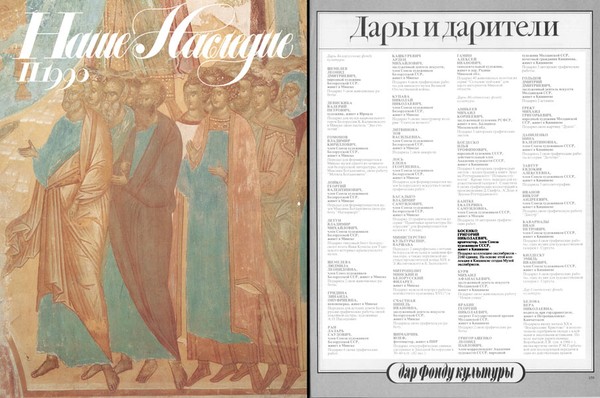
At the time, I greatly admired the magazine “Our Heritage,” published by the Soviet Culture Fund and the USSR State Committee for Printing. After familiarizing myself with the Fund’s activities, I conceived the idea of establishing an ex libris museum.
I approached the Moldavian branch of the Soviet Culture Fund with a proposal to donate my own collection of bookplates and thematic library to it on the condition that a specialized ex libris museum be opened.
A decision was made: until separate premises could be allocated, the ex libris museum would open in the halls of the A. S. Pushkin House Museum, since this was connected both thematically and geographically: A. S. Pushkin-the book-the ex libris.
To establish the collection of the Chișinău museum, I transferred, under official deeds (which I still retain), more than 2,000 bookplates and specialist literature, and donated 100 ex libris to the museum’s branch in the city of Kotovsk (now Hîncești).
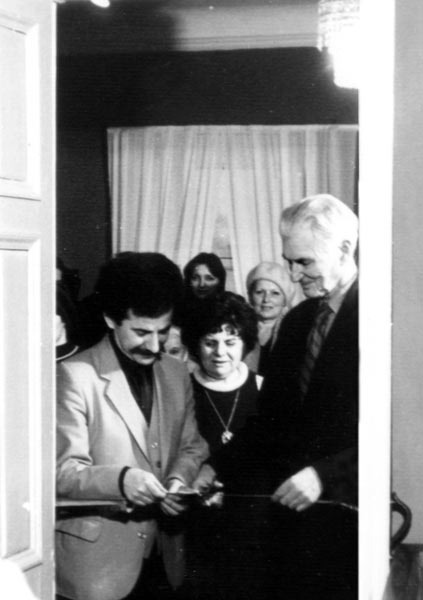
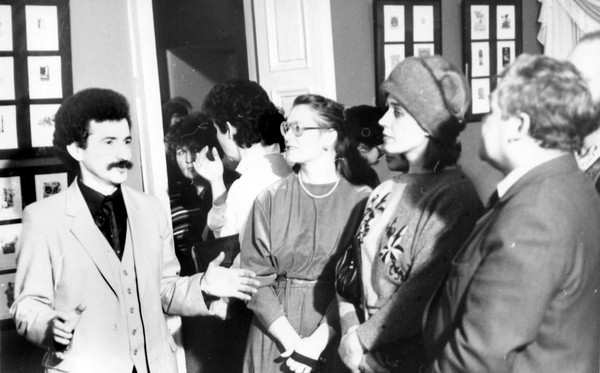
The Ex Libris Museum in Chișinău opened on February 10, 1988, on the fortieth anniversary of the poet’s House Museum. It was the first ex libris museum in the Soviet Union. Such a museum appeared in Moscow only two years later.
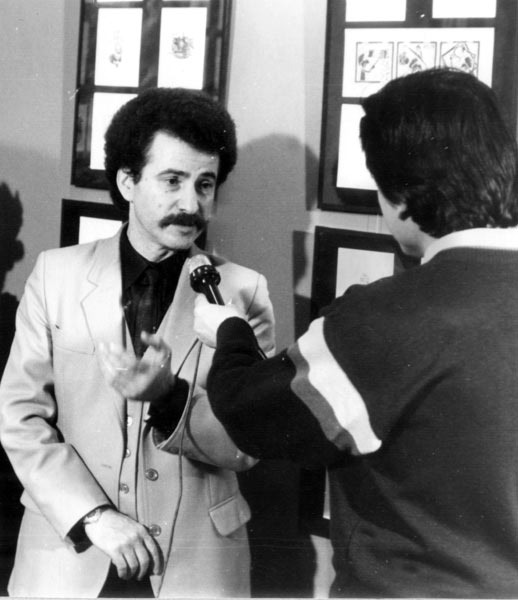
Those present at the ceremonial opening of the Ex Libris Museum included Deputy Minister of Culture of the Moldavian SSR A. K. Danilă; People’s Writer of the Moldavian SSR A. P. Lupan; First Secretary of the Board of the republic’s Union of Writers I. K. Ciobanu; First Deputy Chairman of the Board of the Moldavian Culture Fund D. D. Goltsov; and Director of the future Moscow Ex Libris Museum V. V. Loburev.
The opening ribbon was cut by Professor B. A. Trubetskoy, chairman of the Pushkin Commission of the Moldavian Culture Fund, and me.
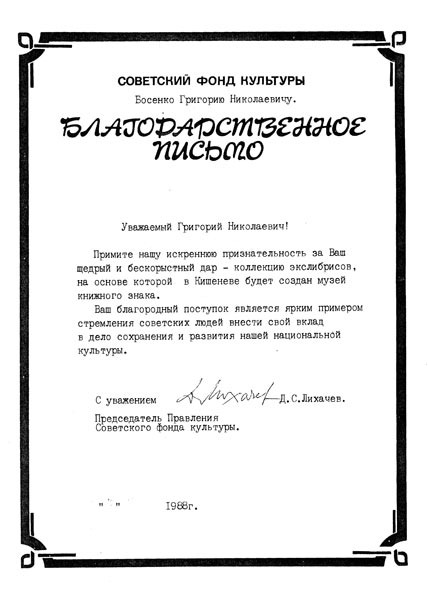
A letter of appreciation addressed to me arrived from the Soviet Culture Fund, signed by Academician Dmitry Likhachev. The event was covered by virtually all local newspapers and by the All-Union magazine “Our Heritage.”
The Ministry of Culture allocated funds to acquire unique works from the collections of renowned collectors in Moscow, then Leningrad, and Lviv. I was designated the voluntary director of the Ex Libris Museum.
In October 1989, the Ex Libris Museum-a branch of the A. S. Pushkin House Museum, as it was then called-organized the Inter-Republican Bookplate Exhibition-Competition “The Life and Work of A. S. Pushkin,” dedicated to the 190th anniversary of the poet’s birth. Everything required for the exhibition was published, prizes and catalogs were presented, and the opening was celebrated ceremonially.
And then came a long period of oblivion...
The preparations for establishing the museum alone required more than twelve years of intensive work.
I deeply regret that an entire stratum of historical culture, into whose creation so much effort and so many resources were invested, is being lost. The collection of our unrealized museum is a rare assemblage of ten thousand engravings. But... the museum is dying. The building beside the Pushkin Museum that had been promised for the Ex Libris Museum was never transferred to it, while its holdings have still not been systematized, exhibitions are not held, and the ex libris movement has faded away.
Few people know that the Ex Libris Museum in Chișinău contains works by contemporary Soviet and Moldavian artists, as well as rarities dating from the lifetime of Peter I and historical figures of his era. It contains bookplates belonging to Antioch Cantemir and Field Marshal Bruce, and hidden there is one of the rarest ex libris in the world-the Hildebrand Brandenburg bookplate dating from 1480 (only three copies have survived worldwide-confirmation of this was received from the academic department in Leipzig). This entire unique heritage is kept in the storage rooms of the A. S. Pushkin House Museum.
I cannot reconcile myself to the fact that this unique cultural heritage is now virtually inaccessible and that, for twenty-five years, the rarest exhibits of medieval and contemporary art have lain untouched. In reality, by receiving additional collection items, the museum acquired a higher classification, but the ex libris themselves were forgotten; practically no one is shown them, and museum staff do not need these troubles at all.
We have lost and continue to lose our cultural environment. We do not organize ex libris exhibition-competitions where young artists could demonstrate their abilities. There is no opportunity to study original bookplates or see how they are made and printed.
By consigning the heritage of the past to oblivion, we sever the continuity of time, without which progress is impossible.