2010
“Russian Bookplate Journal,” Issue 12, pp. 65-68
Moscow. Published by “RAE and MSK”
“The National Culture of the Gagauz People in the Bookplates of Petr Plakh”
Petr Nikolaevich Vlakh was born in 1945 in the city of Comrat, Moldavian SSR. He graduated from the I. E. Repin Republican Art School in Chișinău and the Ivan Fedorov Lviv State Institute of Printing.
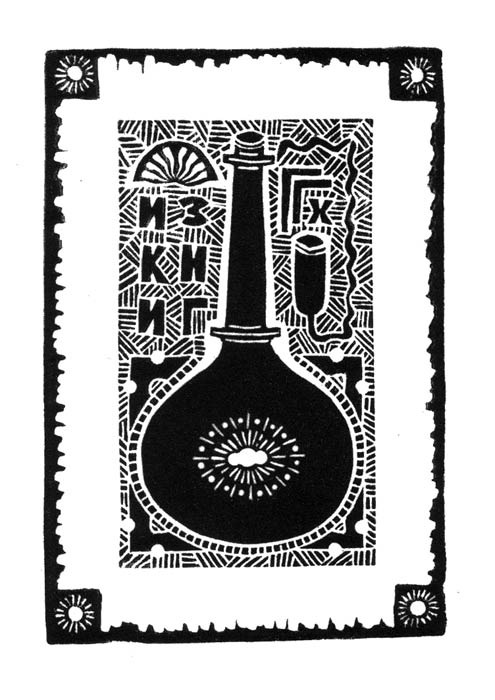
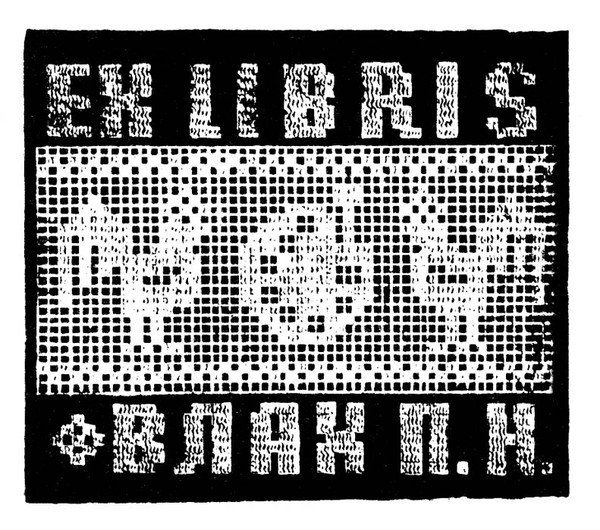
The artist created approximately one hundred bookplates dedicated to the contemporary culture of the Gagauz people. Many of his bookplates are dedicated to collectors and custodians of objects of Gagauz culture and folklore.
Petr Vlakh’s works were exhibited at the All-Union exhibition “Bookplates of the Family of Peoples,” dedicated to the 50th anniversary of the formation of the USSR (1972, Vilnius); the All-Union Bookplate Exhibition (1972, Lviv); the Exhibition of Moldavian Bookplates (1973, Moscow); the All-Union Bookplate Exhibition “For Our Peaceful Happiness” (1974, Vilnius); the international exhibition “Book-75” (1975, Moscow); and republican exhibitions in Chișinău.
Today, the artist lives and works in the city of Comrat (Gagauzia, Republic of Moldova).
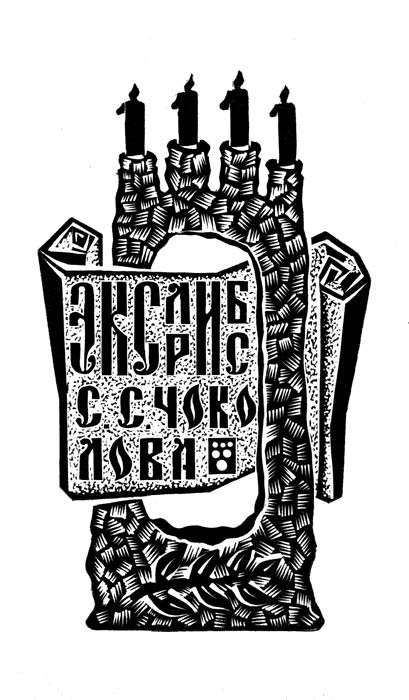
Vlakh’s appearance at bookplate exhibitions in the 1970s came as a surprise. The works on display revealed him to be an artist who had discovered and deeply felt a single theme. It was evident that, in his creative development, the graphic artist was not only consistent but also organic. All of Petr Vlakh’s miniatures were created using the linocut technique. Many years of engraving in this manner enabled the artist to study and understand its specific nature and distinctive features thoroughly and to achieve a certain degree of success.
With his extensive knowledge of national decorative and applied art, Petr Vlakh incorporates its elements into all his bookplates. These are two-dimensional miniatures that captivate through the originality of their vision, the integrity of their compositional solutions, and their technical mastery.
The imagery in the miniatures (as is often the case in art) serves as a vehicle for the spiritual principle, embodying a certain complex of ideas about culture and everyday life, education and taste. The artist preserves the traditional relationship between the bookplate and the character of the bibliophile’s collection, tastes, and interests.
Vlakh’s bookplates tend towards symbolism. In them, the content of the bookplate is expressed not only through conventional imagery, but the very style in which the plane is developed serves as a distinctive means of expressing an idea of its owner.
For a number of these artists, such explorations were a transient event in their creative work and did not significantly affect the foundations of their art. For Vlakh, they became a matter of conviction and encompassed his entire creative path. That is, by all the principal indications of the artist’s development, this corresponds to the nature of his artistic intuition, and we shall not be mistaken if we say that Vlakh’s bookplates are connected with the quest for an original Gagauz art. In his engravings, he establishes a dialogue with the motifs, techniques, and figurative devices developed by the national culture. Within the plastic events of the miniature, these themes invariably sound as the principal ones.
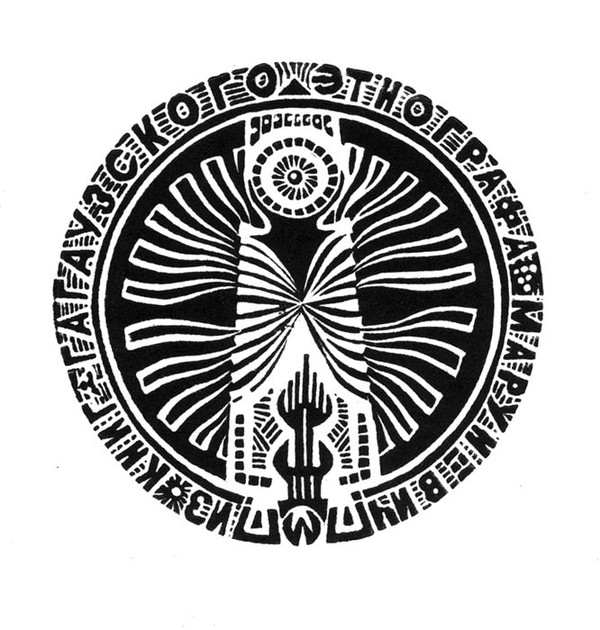
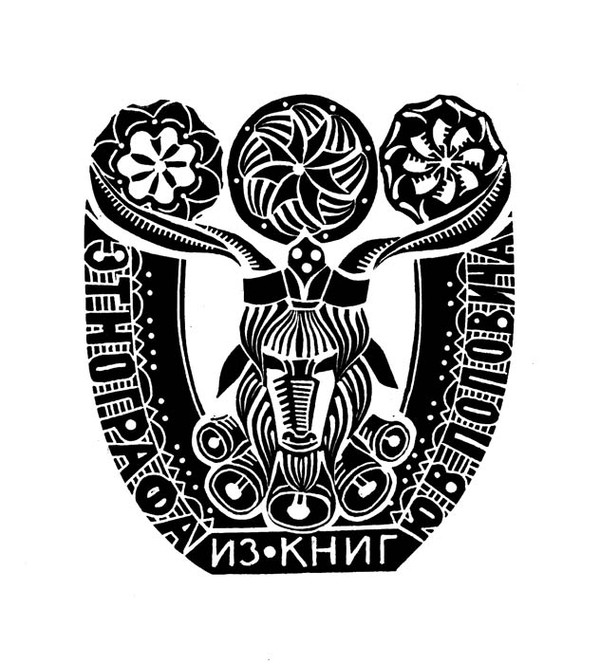
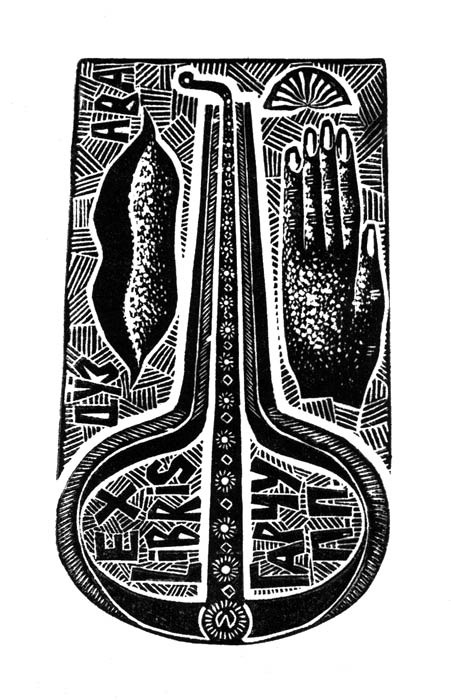
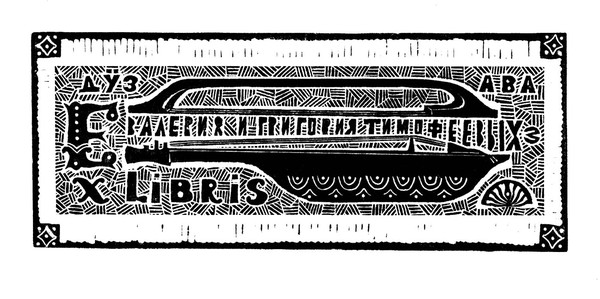
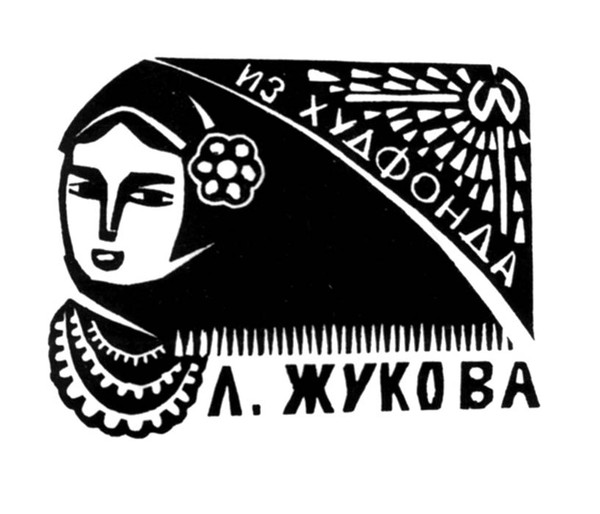
It is precisely in this connection that it is appropriate to speak of a quality constituting one of the most important features of Petr Vlakh’s art - the ability to express the image of the bibliophile, and to do so not in an abstract but in a deeply personal manner. Following this principle, the artist gives his bookplates symbolic meaning. In their subjects, he focuses on the development of two principles, which correspond to two representational techniques: the first, real and principal object, made concrete and placed within the second - the textural and semantic one. This plastic theme runs as a background through all the bookplates, as though rephrasing the dramatic principle of “continuous action” into the principle of “continuous representation.” Such are the bookplates of the ethnographers Yu. V. Popovich, M. Marunevich, and S. Kuroglo, and of the Gagauz Historical and Ethnographic Museum in the village of Beșalma.
The explorations in bookplate art of the 1980s and 1990s may be attributed to an understanding and interpretation of other stylistic techniques. The graphic sheets consist of the same frontal compositions, but now without textures. Each time, their expressiveness acquires a different resonance. The compositions attract attention through their distinctive treatment of line and form. At the same time, this is no longer the traditional composition with its object forms and complex textures, such as we often see in the artist’s early work. The classical motif appears here in a different interpretation, in which drawing skills and the influence of folk art can be discerned. It is transformed into various manifestations of a symbolic nature. This world is interpreted plastically: sometimes through an associative refraction of images, and sometimes through concrete objects. Although there are no direct analogies here and the stylisation is sufficiently veiled, it nevertheless creates the necessary sense of a common spirit linked to a specific geographical and historical environment. Thus arises a metaphor that extends a thread of continuity from literary and visual traditions to the creator’s contemporary perception of the world. The editioned bookplates continue to be distinguished by their originality, decorative and compositional solutions, and the precision with which the engravings are executed.
As before, P. Vlakh works with a burin on linoleum, and his works contain something unique. Silence and emotional contemplation can be discerned in the miniatures. The artist himself has defined his position. He embraces a concept containing a figurative structure intended to elevate the image to the significance of a symbol. Despite the simplicity of the subject matter in each of his graphic works, every new bookplate contains the seed of future works, future miniatures. As before, the artist establishes a dialogue with folk motifs, folkloric techniques, and creative devices developed throughout the entire history of graphic art (in particular, with the manner of relief engraving, which is most vividly represented in the works of great masters).
The significance of the artistic activity of Petr Vlakh - an artist from the sphere of decorative and applied art - has not yet been fully comprehended or studied. His work still awaits analysis by art historians, but it can already be said that P. Vlakh’s artistic works occupy a major and important place in the visual culture of Gagauzia.