Twenty Out of Twenty-Five
(Memories of the Creation and Development of the Union of Designers of Moldova)
Twenty-five years have passed since the creation of the Union of Designers of Moldavia. During this time, the state of the USSR, which created this creative Union, managed to disappear. The century that marked the birth of such a truly important profession as that of the “designer” has passed; with it, we also lost many of our colleagues who stood at the origins of Soviet, republican, and post-Soviet design. However, the foundations they laid for the edifice of “design” proved sound and correct. Modern man worships design in all its manifestations: fashion, interiors, automobiles, etc. Today, it is not the visual arts, cinema, or television that reign supreme; rather, design is “the most important of all the arts.” It lives in time and space: it has taken possession of architecture, penetrated theater and literature, and entered the economy and everyday communication. This is no longer the former artistic engineering; it is an attitude toward modern life. Design is the brand of the age. Design is a phenomenon of contemporary culture, a sign of movement and transformation.
The past 25 years, in our turbulent time, when attitudes toward the profession are changing rapidly and the formats of art are being reconsidered, represent a long journey, a great school of development.
The creative Unions established at different times were programmed as ideological assistants to the Soviet state (the Union of Architects of the USSR in 1932, the Union of Writers of the USSR in 1934, the Union of Cinematographers in 1957, etc.).
During “perestroika,” the issue of creating new industrial products, competitive goods, and their packaging became acute. Specialists working purposefully in these fields were needed, and on May 15, 1986, the Central Committee of the CPSU adopted a resolution (without broadly publicizing it) on organizing the Union of Designers of the USSR. On July 18, 1986, the USSR State Committee for Science and Technology issued Resolution No. 324, “On the Organization of the Union of Designers of the USSR,” and an Organizing Committee was formed under the chairmanship of Y. B. Solovyov, Director of the All-Union Research Institute of Technical Aesthetics. At that time, technical aesthetics was a veiled name for Soviet design.
All the materials were distributed among the Union Republics. Local organizing committees were established, and on March 7, 1987, the First (Organizational) Conference of Designers of Moldavia was held in Chișinău. Its task was to nominate delegates to the founding congress of the Union of Designers of the USSR.
The following were nominated:
Klimov A. - chief artist of the Ungheni Carpet Factory
Melnik Y. - deputy director of NOTiU
Michri A. - head of the design and technical bureau of the Vibropribor Production Association, Chișinău
Rusanov V. - head of the technical aesthetics sector of the Moldavian Tochlitmash Production Association, Tiraspol
Titarev Y. - chief artist of the Moldavproektmebel Research and Production Association
Troitskaya T. - chief artistic director of the Chișinău Fashion House
Fedorenko A. - chief artistic director of the Republican Fashion House.
On April 3-4, 1987, the Founding Congress of the Union of Designers of the USSR was held in the Hall of Columns of the House of the Unions in Moscow. It was attended by 615 delegates and 500 guests from various Union republics. Representatives were present from every branch of industry and from various areas of design planning and research.
The chairman of the Organizing Committee of the Union of Designers of the USSR, Y. B. Solovyov, delivered a report entitled “On the Objectives of the Union of Designers of the USSR.” During the discussion, the Union’s charter was approved, and it was decided that the congress delegates, as the most authoritative representatives of Soviet design, would be considered its first members.
The congress elected the governing bodies of the Union of Designers of the USSR - a 92-member board and the Central Auditing Commission.
On April 4, an organizational plenary session was held, at which Comrade Solovyov Y. B. was unanimously elected chairman of the board of the Union of Designers of the USSR, and the following were elected secretaries of the board: Andreeva I. A., Bobykin A. L., Zaitsev I. A., Kvasov A. S., Muravyov V. S., Olshanetsky A. S., Runge V. F., and Fedorov V. K.
These were the best-known and most respected design professionals in the Soviet Union.
Following the founding congress, admissions to the Union of Designers of the USSR were held in the republics. From December 23 to 25, 1987, the first Republican Design Exhibition was held in Chișinău; on the basis of the works exhibited, 29 people were admitted to the Union. I had the opportunity to exhibit at this show and join the Union of Designers of the USSR.
Active preparations began for the Republican Founding Congress. On February 20, 1988, the founding (or first) congress of the Union of Designers of Moldavia was held in the conference hall of the Interior salon. The exhibition was once again mounted in the foyer, but this time it featured works by members of the Union. The congress was attended by guests of various ranks from Moscow and heads of republican divisions, who viewed the republic’s achievements in design with astonishment. A substantial contribution to the organization of our Union was made by Vladimir Fyodorovich Runge, secretary of the board and Candidate of Art History in technical aesthetics, and Vladimir Mikhailovich Munipov, a board member and academician of the Russian Academy of Education. The exhibition presented tested developments protected by copyright.
During the congress, a nine-member board and an auditing commission were elected. At the subsequent plenary session, Yuri Titarev was elected First Secretary of the Union of Designers of Moldavia.
The secretariat consisted of Yuri Ambros, Yuri Melnik, Alexander Michri, and Tatiana Troitskaya. The board members responsible for different areas of work were Anatoly Klimov, Anna Fedorenko, Vladimir Shashkov, and me, Grigory Bosenko. The area in which I was to work was design education. At the same time, an “art faculty” opened at the Institute of Arts, offering only one specialization in our field - “Interior and Equipment.” I was teaching there at the time. Subsequently, another discipline, “Graphic Design,” was introduced for a short period. To this day, the republic has a desperate need for graphic-design specialists, but no one trains them.
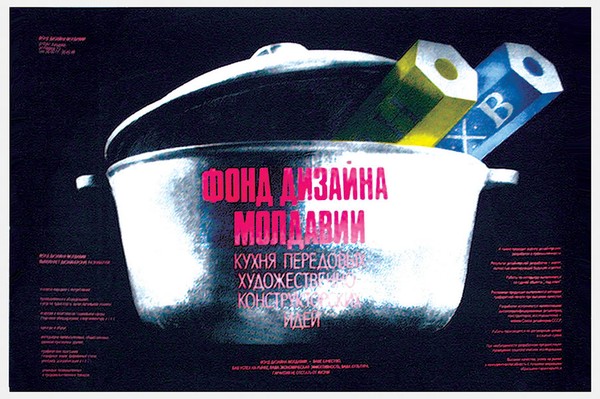
To support the activities prescribed by the charter, it was necessary to create a production division. In March of that same year, the “Design Fund,” an enterprise similar to those operating under other creative unions, was registered under the Union of Designers; it soon discredited itself in every respect. It was decided to reformat it as the Creative Production Association “Design Fund of Moldavia.” Everything started from “zero” and was created through the considerable efforts of designers.
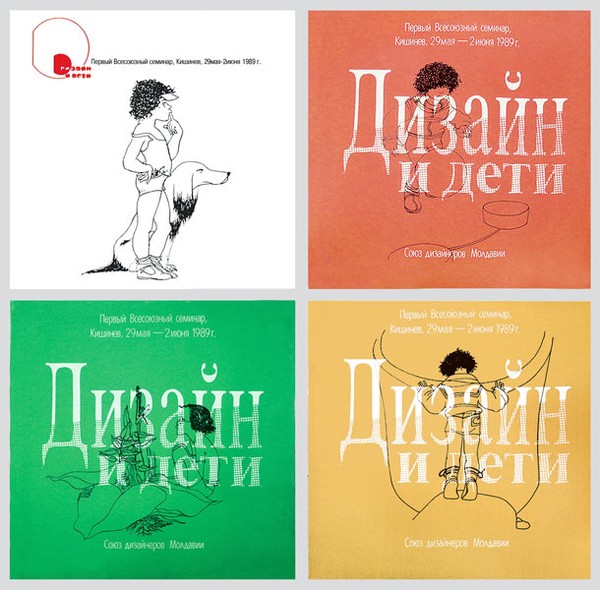
One of the large-scale events successfully conducted by the Union’s board was the First All-Union Seminar “Design and Children,” held in Chișinău from May 29 to June 2, 1989.
The seminar brought together leaders from all the republics and provided an overview of Moldavian design.
Interaction between the administrative staff of the Union’s board and the Design Fund did not work out. Everything stalled, and on February 27, 1990, at a plenary session of the Union of Designers of Moldavia, G. Bosenko was elected chairman of the board of the Union of Designers. A Conference with the powers of a congress then heard his program for advancing the Union and its divisions and approved his candidacy. “Perestroika” was drawing to a close, and this affected every sphere of our lives. Despite the presence at the Conference of our supervisor from a department of the Council of Ministers, I became the first head of a creative union in the republic who was not a member of the Communist Party.
From that moment until December 2009, I firmly linked my life with this public organization.
Unlike other creative Unions, the Union of Designers interacted with and was subordinate to various ministries (we were subsequently assigned to the Ministry of Culture). We depended on them, and working became increasingly difficult. Legislative confusion and the transition to market relations required different approaches to the economics of survival and the preservation of the organization’s creative potential. However justified the criticism directed at the secretariat and the board may have been, due credit must be given to the organizational work carried out by the board’s staff - the contractual system in the Fund functioned, new designers joined the Union, and opportunities for creative trips were sought. And all this took place against a background of insufficient experience in managing a public organization under new conditions and the absence of mechanisms regulating the interests of the Union of Designers in the Republic.
Having announced the Union of Designers, it was necessary to identify potential creators and bring them into our organization. The admissions commission undertook this troublesome and responsible task, thereby playing an important role in shaping the Union at that time. Regional divisions of the Union of Designers began to be established in cities with developed industry. Thus, extensive work was conducted in Tiraspol, headed by board secretary Y. D. Melnik, to establish a municipal organization of the “Union of Designers of Moldavia.” At a meeting convened on November 20, 1990, the chairman of that organization’s board was elected unanimously. Arthur Evdokimov assumed the position. The Union was acquiring a new status and accordingly required new economic relationships. It became necessary to create independent creative production organizations headed by members of the Union. The leadership of the Republic allowed them to register under the Union and become its divisions. About twenty such organizations were established, including the AMBROS and Galanin design studios, the Linia-T firm, the MAKO Advertising and Publishing Center, and so forth. Orders were arranged, interest in independent creative work emerged, and the financial life of the public organization became more active.
But no sooner had we organized the work and set ourselves on “creative rails” than, in November 1991, once again in Belarus, near Minsk, at Raubichi, the final plenary session of the Board of the Union of Designers of the USSR took place. It resolved to preserve the unity of the Union regardless of the political consequences of the USSR’s possible dissolution.
In accordance with this decision, as early as January 1992, a Founding Conference was held that reorganized the Union of Designers of the USSR into the International Association “Union of Designers” (we joined it as well, but only in 2000).
Amid economic collapse and the absence of public commissions for design, unity was necessary in order to preserve our profession and secure its future. To most thinking people uninfected by the virus of extremism and irresponsible “rally-going,” this position was obvious. Owing to circumstances and pseudo-sovereignty, we abandoned a single, large creative organization of designers where one could communicate and develop. We decided to move forward independently, on our own.
After prolonged work with lawyers, the Second (Founding) Congress of the Union of Designers of Moldova, newly styled Uniunea Designerilor din Republica Moldova, was held in Chișinău on January 11, 1992. The congress delegates resolved to establish the “Union of Designers of the Republic of Moldova.” It became the legal successor to the Moldavian branch of the Union of Designers of the USSR and an independent public formation.
The congress approved the Charter, which was registered by the Ministry of Justice of the Republic of Moldova on January 1, 1993.
In view of the absence of industry in the Republic, the creative divisions comprised graphic design and advertising, environmental design, fashion design, textiles, and accessories.
In accordance with the new Charter, the delegates directly elected the President and Vice President of the Union. These positions were filled, respectively, by Grigory Bosenko and Yuri Melnik.
The original definition of the Union of Designers of Moldova as a voluntary creative organization operating on the basis of full cost accounting and self-financing compelled the Union’s board to engage in economic activity that was not very familiar and that, in many respects, interfered with creative work. Confusion in the legislative framework, the introduction of new forms of ownership into economic circulation, the lack of “start-up” capital for an independent post-Soviet organization, and rented premises allocated under a resolution of a Council of Ministers that no longer existed greatly complicated our organization’s activities. Other creative Unions inherited premises (mansions) from the USSR: writers, artists, composers, and so on. It was precisely this issue that gave rise to the greatest number of problems and conflicts.
Against this background, the heads of the recently established divisions of the Union of Designers of Moldova turned them into “self-sufficient organizations” and attempted to dictate their own rules of the game to the board. This was the principal reason for the unsatisfactory state of the organization’s production and economic activity and hindered further implementation of its declared work. At that time, the Ministry of Culture did not support the Union of Designers.
From today’s perspective, it is very easy to criticize the Charter of the Union of Designers, the structures that were created, and our economic condition. In my opinion, however, real benefit comes not so much from criticism as from analyzing and forecasting the situation.
The principal things I promised upon being elected-the recognition of the designer’s status; recognition of the profession at the state level; professional development - seminars, exhibitions, and tours; recognition of “Design” as a field of study in institutions of higher education (this was reflected belatedly-in Law No. 142-XVI of July 7, 2005) - were accomplished.
The path was long and difficult, but today everyone knows that design exists and that designers exist.
At that time, the organization already had about one hundred members.
With the decline of the Republic’s economy, design groups at enterprises were the first to be cut.
A significant number of specialists turned to interior design; others sat down at computers and began working in design graphics and advertising. This sphere of activity rapidly gained momentum; specialists were in demand and many achieved considerable success in it. Our designers created the first postage stamps, banknotes, logos, and corporate identities for banks, enterprises and organizations, cultural institutions, festivals, and exhibitions. Interest in design arose among a group of professionally oriented young people: fashion designers, leather and footwear artists, stylists, and photographers. Applicants began to be admitted to the Union. Members of the organization joined forces and established design studios and enterprises. In terms of their activities, these were design and artistic-production organizations engaged in one-off or small-batch production. A certain “boom” in design began to emerge. Unlike many post-Soviet creative organizations, the Republican Union of Designers was alive, and its members were in demand. The times required a professional environment with its own criteria and motives of conduct. The Union, which had no material base whatsoever, needed “organization” and creative growth. It was necessary to conduct educational seminars on “Intellectual Property,” hold round tables on the contemporary state of every level of design at that time, organize displays, and exhibit works by Union members. All of this was done.
Each organized exhibition received fairly extensive press support, and television broadcast reports from the openings. All this significantly stimulated the development of design in the republic.
The board pursued a coordinated policy on matters affecting the interests of the Union and designers. Evidence of the organization’s growing authority at that time was provided by the regular service of its members on the juries of international competitions held in Moldova in various fields of design and by the invitations they received to participate in international exhibitions and festivals. Union members began serving on republican expert panels.
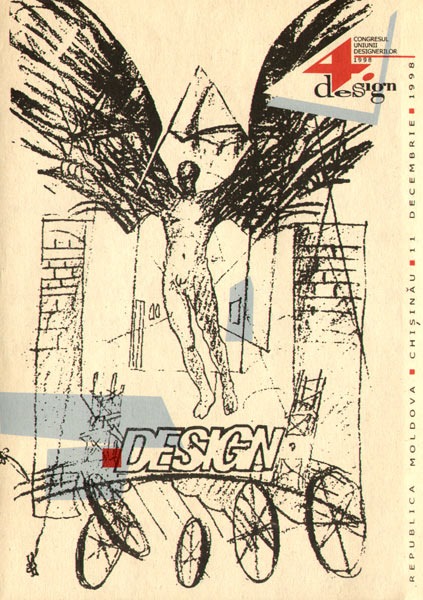
By the end of the 1990s, the time had come to advance not only the Union’s authority, not only the organizational and public work of its members, but also their professional activity. At the Fourth Congress of the Union of Designers of Moldova in December 1998, I presented the following necessary points for elaboration and implementation in order to further develop design:
- first and foremost, the creation of a national school of design, as well as alternative design education;
- protection of designers’ professional and creative rights;
development and coordination of “market” rates for carrying out creative commissions;
provision of creative studios to members of the Union of Designers who needed them;
provision of certain social and economic benefits through the relevant laws, decrees, and resolutions;
meeting the needs of members of the Union of Designers in the cultural and creative spheres (Houses of Designers, creative centers, etc.).
It was decided to expand the names of the professional sections as dictated by practical activity:
- computer design;
- advertising design;
- photographic design and advertising photography;
- landscape design and phytodesign;
- history and theory of design
Events in the republic did not facilitate implementation of these plans, despite repeated appeals or promises (I do not know which) expressed at meetings with the leadership of the Republic.
The only achievement within the legislative framework was the privatization of creative studios located in the housing stock. Three creative organizations participated jointly in this process: the Union of Architects, the Union of Designers, and the Union of Artists.
The issue of licensing design activity within the relevant Union was becoming urgent. A license was to confirm qualifications and certify the right to undertake independent design activity and lead a creative team. Strong support was needed. In order to obtain it, on March 17, 2000, the Union of Designers of Moldova became a member of the International Association “Union of Designers,” headquartered in Moscow.
The International Public Association “Union of Designers” was a member of the Council for Cultural Cooperation of the member states of the Commonwealth of Independent States. Since 1997, the International Public Association “Union of Designers” has been a member of ICSID.
This organization was established in 1957 as the International Council of Societies of Industrial Design, headquartered in Helsinki, Finland. It conducts joint initiatives with ICOGRADA (International Council of Graphic Design Associations) and IFI (International Federation of Interior Architects/Designers). It brings together 148 design organizations from more than 50 countries worldwide.
From the time we joined the International Public Association “Union of Designers,” we received informational support on design development and gained opportunities to participate in exhibitions and competitions, conferences, and seminars.
An illustrative result of our designers’ creative professionalism was their participation in the 2001 international exhibition “Interdesign,” where we received a diploma and the “Crystal Globe.” Our life became more active; we were constantly invited to academic conferences, exhibitions, and all of the Association’s international events.
Through the efforts of the leadership of the International Public Association “Union of Designers,” the “Artistic and Industrial Design” branch of the International Academy of Sciences on Nature and Society was registered with the Ministry of Justice of the Russian Federation in May 1997. The International Academy of Sciences on Nature and Society comprises authoritative and outstanding scholars and specialists from the Russian Federation and foreign countries in the field of design. The branch’s leadership included full members of the Academy: V. V. Senkovsky - Academician-Secretary of the Branch; V. F. Runge - Academic Secretary and Vice President of the International Association “Union of Designers”; I. A. Zaitsev - President of the International Association “Union of Designers”; A. V. Yefimov - Vice President of the International Association and Chief Artist of Moscow; L. A. Kuzmichev - Director of the All-Union Research Institute of Technical Aesthetics; V. T. Shimko - Professor at the Moscow Architectural Institute; and A. S. Plakhtiy, Chairman of the Moscow branch of the International Association “Union of Designers.”
In 2000, I was invited to prepare materials about my creative work for admission to the Academy. The documents were reviewed and approved. Since that year, I have been a corresponding member of the International Academy of Sciences on Nature and Society, in its “Artistic and Industrial Design” branch.
In the 2000s, a design department was opened at the Russian Academy of Arts, largely thanks to the Academy’s president, Z. K. Tsereteli.
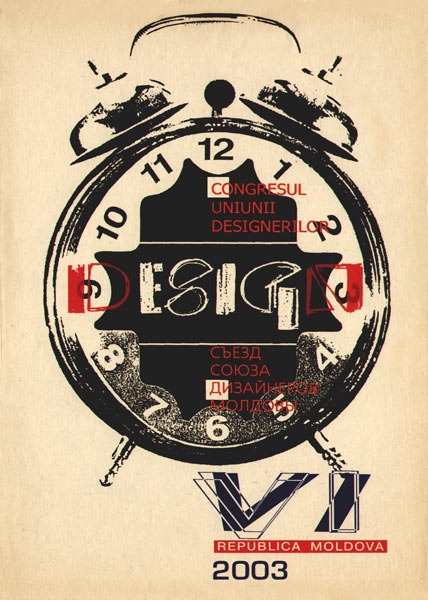
The Sixth Congress of the Union of Designers of the Republic of Moldova, held in Chișinău on October 24, 2003, established honorary membership in our Union. The first designers to receive the diploma “Honorary Member of the Union of Designers of Moldova” were Melnik Y., Panchenko L., and Fedorenko A. — for their major contribution to the development of design in the republic.
That same year saw the publication of the first printed edition - “15 design.md” (Union of Designers of Moldova. 15 Years).
The Union began actively cooperating with all salon-shops and acquainting itself with new collections from European factories that met high standards of quality and aesthetics.
In 2005, the First Republican “Design-Interior” Exhibition-Competition was held, and it has since become traditional. In 2007, the “Art Podium” professional competition for young fashion designers was launched. Interesting events that attract colleagues have constantly taken place, and continue to take place, within the sections.
For the Union’s continued existence, it must gradually be converted to a Club format, where professionals can communicate and exhibitions and seminars can be held, and where professionals will have an opportunity to become acquainted with design trends, the latest examples of furniture and equipment, finishing materials, and so forth.
The design club should offer professional-development courses to everyone wishing to acquire knowledge and skills in various fields of design.
Classes should be taught by highly qualified members of the Unions of Designers and Architects, professional educators, art historians, and specialists with extensive practical experience who enjoy authority at home and abroad.
A “Design Club Library” should operate here, containing a broad selection of literature, both domestic and foreign, audio and video catalogs, company brochures, and so forth.
Other forms of organizational and creative activity must emerge. The Union must gain the possibility of a new, alternative form of association. Owing to various circumstances, many members of the public organization have remained outside the sphere of the Union’s interests and are consequently passive and indifferent to the fate and life of this public organization. The design club must take this into account as well. Unfortunately, change is impeded by current legislation, under which creative Unions retain Soviet priorities, forgetting that they are no longer ideological mouthpieces.
On December 5, 2009, the Seventh Congress of the Union of Designers of the Republic of Moldova was held. At that time, the Union of Designers of Moldova had 76 registered members. I had been at the organization’s “helm” for twenty years minus two months. I did what I could and preserved what I could. It was especially difficult during the excesses of the “post-perestroika” era. There were reliable supporters and assistants who must be remembered - Yuri Danilovich Melnik and Alexander Mikhailovich Michri. Unfortunately, they are no longer with us-not only in our organization, but in this life. At the Seventh Congress, I handed over leadership to a young board. I was awarded the title “Honorary President of the Union of Designers of the Republic of Moldova.” My successor was my student, colleague, and talented designer, Sviatoslav Tiron. I remain a member of the Coordinating Council of the International Union of Designers. From outside, I support the prestige and authority of this public organization. And I constantly reflect upon what the Union will become and whether the free development of design is possible.