“Our Historical Heritage Is Irretrievably Disappearing”
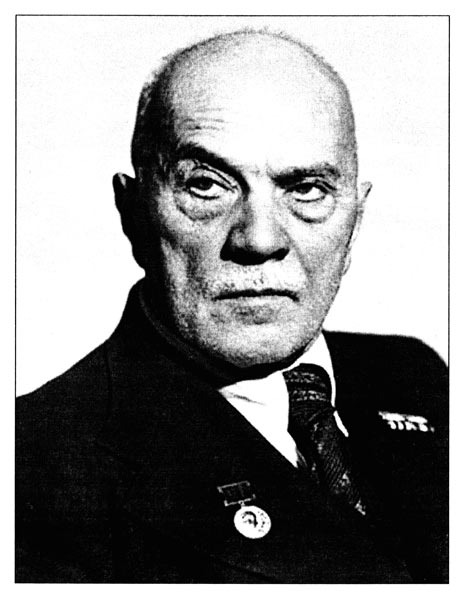
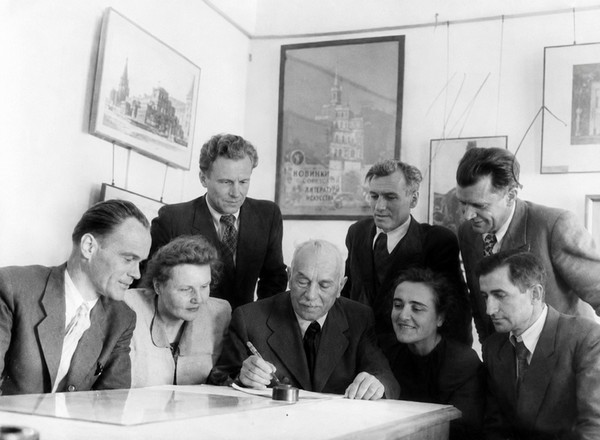
In May, it will be one hundred years since the death of our fellow countryman, academician of architecture Alexey Viktorovich Shussev. The great architect realized his first and last projects in Chișinău. These were the Karchevsky family’s summer house in the Valley of Roses-today a residential building, 1897-and the pedestal of the monument to V. I. Lenin by sculptor S. Merkurov, 1949 (dismantled).
I will try to set out some of my thoughts concerning A. V. Shussev’s participation in the urbanization of our city.
It is now customary to justify all the destruction in the historic part of the city by claiming that these ideas were incorporated into the master plan by architect Shussev (the author of Kazansky Railway Station and the Moskva Hotel in Moscow, a pavilion at the International Exhibition in Paris, the Opera and Ballet Theatre in Tashkent, and other architectural monuments). It is difficult to imagine that Shussev proposed destroying the history of his native city, where he was born and raised. Documents do not confirm that Shussev personally developed Chișinău’s master plan. Nor is there any reference to this in his documents. Among the authors of the master plan approved in 1951 were architects R. Kurtz and P. Rogulin (the father of a subsequently well-known hockey player). The master plan was approved when Shussev was already dead.
As for Shussev, he was a highly cultured, educated, and deeply religious man who designed numerous well-known religious buildings. Shussev knew history perfectly and himself built cathedrals and churches. He knew and loved Chișinău; several buildings here were constructed according to his designs, and to approve the destruction of the historic part of the city or permit the demolition of Chișinău’s oldest churches is simply inconceivable.
Shussev began designing and building religious structures immediately after graduating from the St. Petersburg Academy.
Among the constellation of Soviet architects, there was no specialist who designed such a large number of religious buildings. Some of them include:
The main iconostasis of the Great Assumption Church of the Kyiv-Pechersk Lavra (1901)
Church in New Athos (1908)
Church of the Savior in Natalyevka, Kharkov Governorate (1908)
Reconstruction of the twelfth-century Church of St. Basil in Ovruch (1911)
Marfo-Mariinsky Convent on Bolshaya Ordynka in Moscow (1912)
Church in St. Michael’s Golden-Domed Monastery in Kyiv
Church in the village of Cuhurești near Soroca, Moldova (1912-1916)
Church on Kulikovo Field commemorating Dmitry Donskoy’s victory in 1380 (foundation laid in 1913; construction was not completed)
Trinity Cathedral in St. Petersburg (1913-1916)
Mausoleum of V. I. Lenin in Moscow. In wood. First version (1924)
Mausoleum of V. I. Lenin in Moscow. In granite (1929-1930)
and so on.
There were rumors that Shussev was to be canonized for constructing such a large number of religious buildings.
Shussev last visited postwar Chișinău in 1947 and on 2 October spoke before Moldavian architects. The transcript of his speech is permeated by an appeal to Moldavian architects to preserve the originality of local architecture and religious buildings.
Excerpt from the transcript of Alexey Shussev’s speech before Moldavian architects on 2 October 1947: “An architect must possess a high level of culture. After all, he directs the reconstruction of cities and housing; through his work, he ensures the happiness of the person who lives in that city. The awareness that my work is necessary for a person’s happiness is a very important incentive.”
“You can acquaint yourselves with our own and foreign innovations through literature and journals, but you are weak in studying your own architecture. Rich material lies before you, but you do not delve into it or seek ways to apply it to modern architecture, and you yourselves travel little. I went to Căușeni to see the old church. This single semi-subterranean building makes a tremendous impression-the craftsmanship of old. It is not pure Byzantium; the motifs of specifically Moldavian art are evident in it. Take individual monuments, even in Chișinău itself: the Măzărache Church and so on. They clearly display specific features that must be used; even the old monuments in the cemetery bear signs of the Moldavian style. An architect must be a creator. You must all strive toward this; you must work seriously on yourselves, and each of you must show your creative identity. You know that there are two directions in Chișinău: one is the classical direction brought by the Russians. This is Pushkin-the era of the Varfolomeev House. Chișinău’s classicism has specific Moldavian features… And the second is Moldavian folk folklore. Here there is a most interesting heritage. In addition, you can seek new forms in architecture by using rough stone and cotileț, which do not even depend on style. In simple forms, full-fledged solutions must be provided for suburban housing. All these elements must be reflected in Soviet Moldavian architecture. We face the tasks of restoring destroyed buildings and creating new ones… I repeat: whoever needs it, please come to Moscow; I will help everyone as much as I can.”
And suddenly, ten years after his death, invoking Shussev, they demolished the oldest district of the city, where the following were located:
Old Square
One of the city’s best-known squares was situated a short distance uphill from the crossing over the Byk River and from Măzărache Hill, at the foot of which was the Albishoara spring (the square between the present-day maternity hospital grounds and the Moskova cinema). A public center of Chișinău developed at the intersection of the main trade routes. In the seventeenth and eighteenth centuries, the courtyards of St. Nicholas Church (later the Armenian Church) and the courtyard of the Old Cathedral (the Archangel Michael Church) directly adjoined the square.
The Archangel Michael Church, or “Old Cathedral,” one of Chișinău’s five oldest churches, stood in the area of Bolshaya Street (Petru Rareș), between Governor’s Square and Ilyinskaya Square, next to Old Square. Its construction is tentatively dated to 1741 (at that time, it was the only church in Chișinău).
The Old Cathedral was built in place of one of the oldest churches in Chișinău, burned by the Tatars in 1739. On the 1800 plan, the cathedral is shown without a bell tower; therefore, it may be assumed that the tower was added in 1803 or somewhat later. At that time, the Archangel Michael Church was a cathedral. The church courtyard contained a church house that housed a seminary. The cathedral has not survived to this day-it was destroyed in 1962 during the construction of the Moskova cinema on Molodezhi Avenue (Renașterii Boulevard).
The Ilyinskaya Church was also one of the city’s five oldest churches; its construction is dated to 1808. The Ilyinskaya Church was erected near the Old Cathedral, at the junction of the new and old city. The square formed as a result of the subsequent reconstruction of the surrounding blocks was named Ilyinskaya. The church’s architecture differed little from that of the Old Cathedral and the Măzărache Church, since its construction used the plan of an old Moldavian three-conch church (the “trefoil”). The tall bell tower erected above the narthex had four bells; the largest, weighing 480 kilograms, was cast in Moscow. The church was demolished in the early 1960s during the reconstruction of the continuation of Gogol Street (Metropolitan Bănulescu-Bodoni Street), in accordance with Chișinău’s 1951 master plan.
The Armenian Church, according to prevailing assumptions, was built on the ruins of the Moldavian St. Nicholas Church and may be counted among Chișinău’s oldest religious buildings, dating from the beginning of the seventeenth century. This assumption is supported by the almost complete identity of the plans’ dimensions and forms of the Armenian Church in Chișinău and the Assumption Church in Căușeni. These plans are characteristic of Moldavian churches of the fifteenth and sixteenth centuries.
In 1803, the Armenian Church of the Mother of God was built on the foundations of the Moldavian church. In 1874, architect A. Bernardazzi added a paraclis to the church in the form of a three-arch portico inspired by Eastern architecture. During the Soviet period, the church was used for purposes other than its intended function, which affected its appearance.
Professor of architecture A. Kh. Torosyan dealt with its reconstruction.
In the 1980s, according to a design by architect A. E. Hambardzumyan, the church was rebuilt for new functions.
The oldest churches of Chișinău include, first and foremost, the Măzărache Church (1752), the Church of Constantine and Helena (1777), and the Church of the Annunciation (1777).
In 1945-1946, A. V. Shussev worked on the reconstruction and restoration of postwar Chișinău.
He produced preliminary designs for:
The Government House in Chișinău
Moldavian State University
The park and monument commemorating the Reunification of Moldova and Victory in the Patriotic War.
The city reconstruction plan envisioned a main axis with a compositional center-the Triumphal Arch.
Today, however, everything is presented as if the destruction of Chișinău’s historic center had been proposed almost by the great architect himself. But cutting through the center of a historic city without regard for the urban-planning situation and the established terrain is in no way characteristic of a master architect’s style. It may be assumed that the creator was heavily ideologized. But at that time Shussev was an indisputable authority, and, given the foregoing, he could have proposed a different scheme if he himself had carried out this work.
A. V. Shussev died in 1949; Chișinău’s master plan was completed in 1951, and in the 1960s Chișinău lost a substantial part of its historical heritage.
The authors of the latest master plan, using the name of the great architect and disregarding the observations of Moldova’s Ministry of Culture, the proposals of the National Academy of Sciences, and the international provisions and rules concerning historic cities established by ICOMOS (the International Council on Monuments and Sites; Moldova has undertaken obligations in this field), continue to design and insist on destroying the remaining planning structure of historic Chișinău. Nor do they take into account the results of a population survey conducted by BCI (Business Consulting Institute), commissioned by them (see the master-plan materials).
Are you familiar with Chișinău’s master plan?
NO 62.0%
YES 31.0%
No answer 7.0%
Should Chișinău’s historic buildings be preserved?
Preserved and restored as historical value 39.84%
Preserved 52.11%
Change of use 10.2%
Demolished 5.1%
No answer 11.2%
Do you believe that the historic center should be preserved in the traditions of the nineteenth century?
YES 87.0%
NO 10.0%
No answer 3.0%
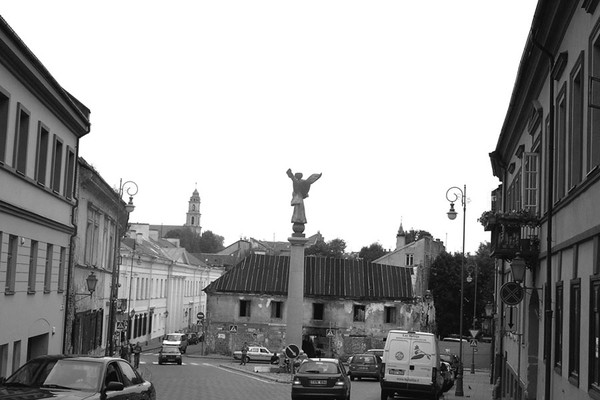
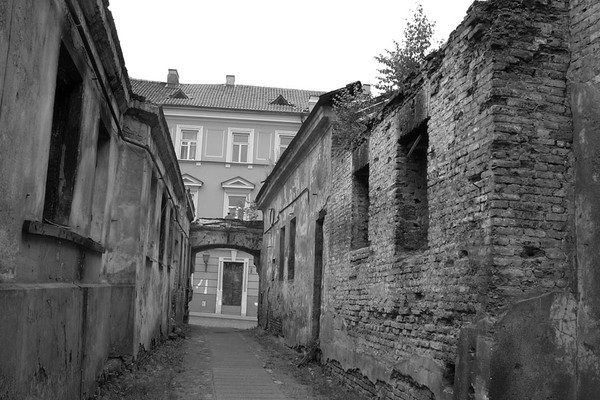
The historic center and old city continue to be destroyed. In recent years, not a single historic building in Chișinău has been properly restored or reconstructed, to say nothing of compliance with international standards.
We need to treat our past with greater care. Our old-city streets are no worse than those in Czech, Hungarian, or Estonian cities. They must be seen and put in order. And if we want to preserve the city’s history, the old quarters must be restored in their original planning structure, monuments must be renovated, comfort must be improved, and historical names and symbols must be returned. We want to have places of interest and attract tourists. Future generations, too, should have the opportunity to see with their own eyes the architectural monuments of past centuries. A city is beautiful because of its layers, its history, and its culture. This is precisely what we seek when traveling to other cities and countries. This is precisely what we preserve in our memory and photographs for a long time. This is precisely what enables us to send our loved ones and friends to these places.
Everything must be directed toward preserving and enriching our historical heritage.