SEVEN MEETINGS WITH BOGDESKO
Grigory Bosenko
On 20 April 2013, the 90th anniversary of the birth of Ilya Trofimovich Bogdesko was celebrated.
People’s Artist of the USSR, full member of the USSR Academy of Arts, laureate of the State Prize of the Moldavian SSR. Laureate and diploma winner of republican, all-Union and international book art competitions.
Gold Medal of the International Book Competition in Leipzig, Bronze Medal of the International “Book-75” Competition, I. Fedorov Diploma.
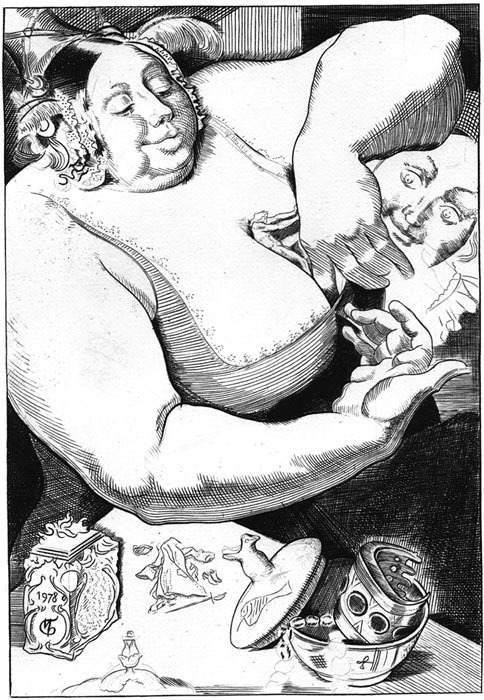
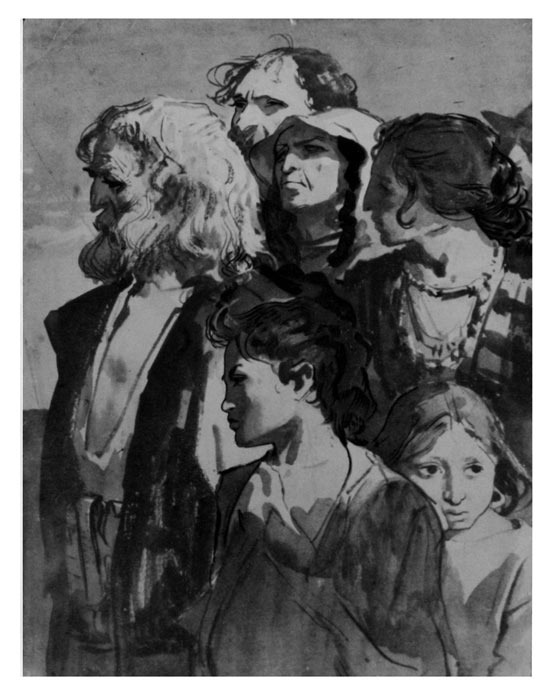
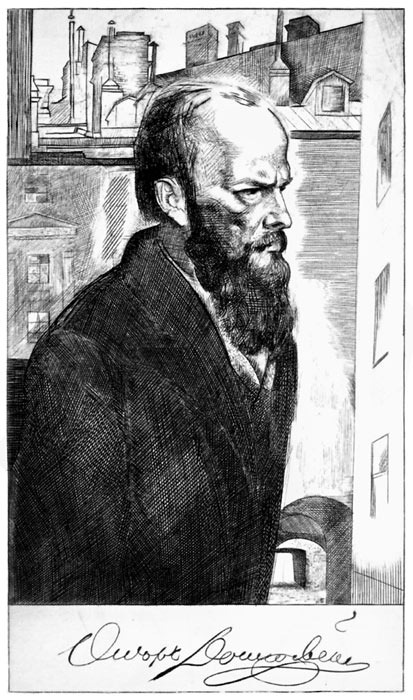
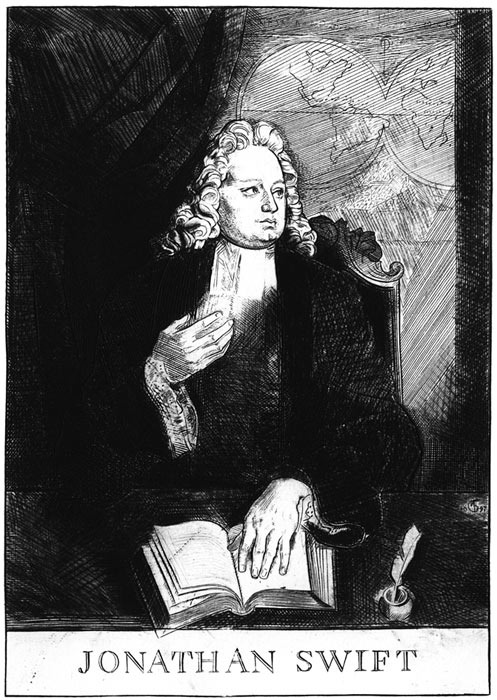
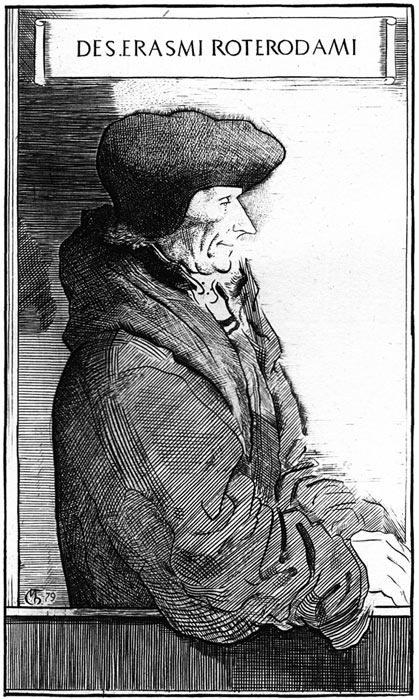
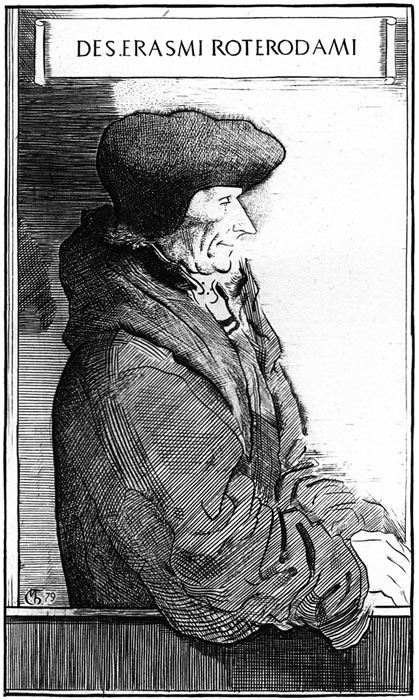
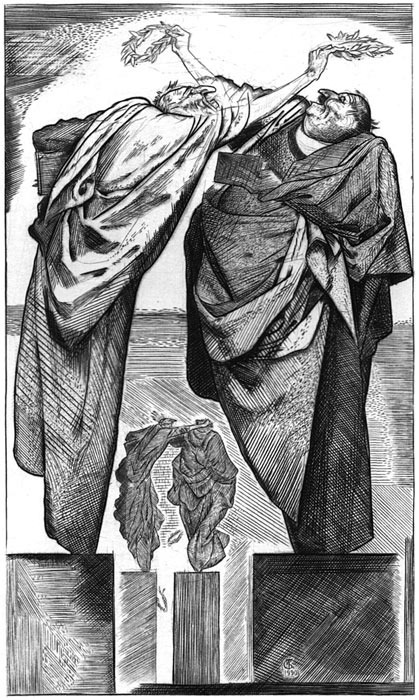
Ilya Bogdesko’s creative work is multifaceted. The artist revealed himself in the fields of monumental painting, easel graphic art and the art of lettering, But the full force of his talent was devoted to the art of the book. He is a recognized master of book illustration in the country and abroad.
Ilya Bogdesko is a delicate person, an artist of great graphic culture, whose work possesses powerful ties with classical Western European visual art.
His work in the design of children’s literature, from textbooks to classical works by the greatest Russian, European and Moldavian authors, actively contributed to the introduction in Moldavia and Russia of progressive principles of illustration and the artistic construction of the book, book graphics and calligraphy.
MEETING I
Studying by Correspondence
I learned Bogdesko’s name long before I met him in person. There was a book kiosk in the lobby of the Chișinău Construction Technical School, where I was studying architecture. An album of drawings entitled “At the Sixth World Festival” by an artist unknown to me, I. Bogdesko, was sold there. I should say that at that time I knew only one Moldavian artist, A. A. Vasiliev, who visited our school and to whom one of my drawings was presented. At the technical school, we studied drawing and painting, but there was little literature for this course. And here was an entire album of sketches and portraits executed in pencil! Moreover, the publication had been marked down, since it had been issued back in 1958. Having bought the book, I learned that two Moldavian artists had represented the republic at the Sixth World Festival of Youth and Students in Moscow. The second was Elvira Romanescu.
After studying the album, I bought another new publication there - the recently released book “Drawings by Ilya Bogdesko” (1963), published by “Cartea Moldovenească.” It became my constant reference book throughout my studies at the technical school and the institute. I came to understand the text written by K. D. Rodnin much later, as I acquired subsequent creations by I. T. Bogdesko. I managed to collect almost all the editions of I. Bogdesko’s work issued in print runs, from “The Purse with Two Coins” by I. Creangă (1962) and “Miorița” (1967) to “Master Manole” by V. Alecsandri (1986). I studied all the artist’s illustrations, reflected upon the creator’s lettering designs, and contemplated his profound and serious approach to the subject and material. In my own creative work, I owe much to my “correspondence” teacher, whom I still try to emulate today.
MEETING II
Creative Collaboration
From 1977 to 1989, I had the opportunity to head the Small Graphic Art and Bookplate Section of the Society of Book Lovers of Moldavia. During this period, thanks to the support of the society’s chairman, I. Țurcan (former director of the “Timpul” publishing house), much was accomplished to promote Moldavian book artists. Thus, in 1979, a major project was proposed for the publication of ten booklets on the art of Moldavian book graphics and bookplates. The first three book illustrators were selected - I. Bogdesko, I. Cârmu and F. Hămuraru, as were the bookplate artists - G. Bosenko, P. Vlah and L. Nikitin. I developed the basic layouts for these two series, and the selection of illustrative material began. Compiling such publications is difficult and painstaking work. The material must fit into the framework of the layout, but most importantly - the artist’s work must be revealed and the author of the publication must be satisfied. Here, for the first time, I encountered the joint selection of material and layout design. I had to communicate simultaneously with the first three authors. The schedule for submitting the material demanded it.
I remember working with Ilya Trofimovich, his reflections and his requirements. I understood that the illustrative material had to be arranged academically and competently. There was a great deal of material. The artist had dozens of beautifully executed illustrations behind him. The publication was intended to be black and white, and this made the task easier. All of Bogdesko’s works are tonal. But selecting and revealing the artist’s range, from lettering to cover, from textbook to literary work, from book construction to graphic material - was a difficult task. Understanding that the illustrations had to fit easily into the visual framework, into the publication’s grid, I conceived the layout as simple and architectonically clear. I selected the works I liked, included them in a version of the layout and went to the “examination.”
Bogdesko carefully examined the proposed version and gently, without constraining the authorial principle, began to reflect upon ease of perception, space within the format, the organic quality of the layout and a different selection of illustrative material. In conclusion, he expressed the wish that a new version be considered in this vein. I began designing the layout and selecting new works.
Ilya Bogdesko’s art was never the province of only a narrow circle of graphic-art connoisseurs. His admirers include bibliophiles, amateur artists and professional graphic artists. In his illustrations one can find elegant wit and social criticism, lyricism and tragic conflicts, an interweaving of the classical with the wandering spirit of modernity. The creative work of a great master is built upon these contrasts and oppositions. Bogdesko is an adherent of realistic art who perceives the world soberly. The leitmotif of his work is the human being and victory over dehumanization. Having formulated this, I decided to construct the new layout so that behind the work one could sense the creator, behind the form - the content, behind the subject - the artist’s thoughts and feelings. I took into account academic margins, lightness and oppositions, the delicacy of the underlays, and went to seek approval.
The layout was accepted, the typeface was agreed upon, and a proposal was made to consolidate what had been accomplished.
Ilya Trofimovich took out a large bottle bearing the calligraphic inscription “Spiritus vini,” executed, of course, by the artist himself. We sat until late, conversing or, more precisely, listening to one another and deriving immense pleasure from our communication. He showed me dozens of copper plates, spoiled and made over again and again. He engraved until he achieved the particular result he needed. He described how exactingly he searched for and developed one composition or another. How, when developing a new subject, he studied new possibilities, new materials and tools necessary for creating the illustrations for that work. I was amazed by such a profound approach to the profession and by his incredible capacity for work. I was astonished by those searches and discoveries, drawings and sketches, of which there were countless numbers. But only those that satisfied the creator remained; the rest were ruthlessly burned in the fireplace, radiating the heat of intellect and titanic labor. These were unforgettable lessons in the graphic craft, the lofty craft of Bogdesko.
Another interesting subject touched upon that evening, one that stunned me, was the International Biennale of Graphic Art in Kraków (Poland), from which Ilya Trofimovich had just returned and where he had served on the jury as the representative of Soviet artists. He spoke about the subjects, formats, techniques and the general orientation of that biennale. With enthusiasm, he spoke of an engraving by a Polish graphic artist, of the incredible sheet format and the incomprehensible size of the printing thaler. In the upper corner of this large-format work, a colored fly had been engraved, casting a shadow. There was professional astonishment in his words, but regarding the result he said: “As a representative of Soviet realistic art, I could not vote in favor of this work.” He was an adherent of the academic school, and formal experimentation was alien to him. But how can one speak of the plastic expressiveness of the visual arts while ignoring the formal structure of a work? Today these explorations are taken for granted, but at that time, in our country of socialist realism, they were taboo. For me, that meeting also became a lesson and continues to provide an occasion for further reflection.
MEETING III
Admission to the Artists’ Union
I linked my life with the professional Artists’ Union in 1971, when, while still a student in the architecture department of the Chișinău Polytechnic Institute, I became a participant in the City Exhibition of Young Artists. The works for the exhibition were selected in the hall of the Artists’ Union of Moldavia by the republic’s leading artists. I was proud that my graphic works had been selected and defended by Gheorghe Vrabie, at that time a young and progressive artist and a graduate of the Leningrad Academy of Arts. From that moment, the record of my creative activity began.
In 1980, already having a large number of works and exhibitions at the all-Union and international levels behind me, I decided to join the Artists’ Union, where until then I had been enrolled in the Association of Young Artists and Art Historians. It was necessary to obtain a recommendation from the professional section, i.e. the graphic arts section, to pass a meeting of the board of the Artists’ Union and to receive permission to hold a solo exhibition. Then came the exhibition, a meeting of the admission committee in the republic and approval by the admission committee of the Artists’ Union of the USSR. A rather serious “meat grinder.” Over the course of a decade, I carried out various assignments for the Union, engaged in public activity promoting art, and was acquainted with almost all the members of the Union.
The board proposed that the solo exhibition be presented in two areas: poster art and small graphic art (small-format engraving and bookplates). At that time, one could not aspire to membership while working in small forms. The works had to be epochal and socialist-realist. I was then succeeding in the genre of small forms, and the chairman of the board, I. Bogdesko, proposed supplementing the exhibition with small graphic art.
An expanded meeting of the board and the admission committee, chaired by Bogdesko, was scheduled for the second of October. My turn came to be called “on the carpet.” I entered quite calmly, sat down on the chair offered to me, and prepared to answer questions. Behind me were approved works, an exhibition display refined and checked by vice-chairman V. Obukh, and excellent recommendations. The first question was staggering; I was completely unprepared for it: “Why are you joining the Artists’ Union when you are already a member of the Architects’ Union (by then I had already been a member of the USSR Architects’ Union for five years)? Continue working as you have until now.” A further series of questions followed in the same tone and with the same implication.
Ilya Trofimovich interrupted what seemed to me to be this barrage: “I spoke with the applicant, and he told me that if admitted to the Union, he would leave the design institute and take up creative work. Therefore, it is necessary to consider the artist’s creative potential and capabilities.” In fact, I had never discussed this subject with anyone. It was a diplomatic move, if it can be considered diplomacy. The fact was that this was a precedent: until then, no one had simultaneously been a member of two creative unions, and it was perceived as something impossible. After some time, the discussion of my candidacy once again turned in an undesirable direction for me: my posters were not of the Soviet school, while small graphic art was not an indicator of art.
Ilya Trofimovich asked the committee to approach my section again and once more pay attention to a number of works. I remained where I was, while the committee members went to “change” their opinion. I do not know what the chairman told them or how he argued his case. The only thing that reached my ears was his statement: “...we need people like this in the Union.”
Returning to his place, he put to a vote the question of whether or not this candidate should be admitted to the secret ballot. It was approved unanimously. I was sure that I had passed the most difficult test. The meeting was very large; many artists were present with whom I was in close contact, for whom I had designed catalogs and booklets, and with whom I had carried out work. When the decision was announced, I learned that four more votes had been cast in favor of my election. I think it was Bogdesko’s double vote that gave me the chance to become an artist.
The strange thing is that, having learned at noon on the twelfth that I had been admitted to the USSR Artists’ Union, by coincidence and without thinking about it at all, I had submitted in advance a letter asking to be dismissed from my job effective the thirteenth. Ilya Trofimovich had spoken of this without knowing anything about the fact.
MEETING IV
Invitation to the GB Exhibition
In the spring of 1986, my first exhibition, “The Bookplate in Etching,” was to take place. I decided to produce an invitation card for this exhibition in etching, handmade, as they say. Considering that many collectors collect such cards, especially those made by the artist himself for an exhibition, I decided to engrave a large GB monogram and the surname BOSENKO on the cover. Inside was an insert explaining - where, when and for what occasion. This was correct and convenient for international mailing. Of course, it was clear that no one would come, but the invitation would nevertheless enter the collections of artists and collectors. I produced the edition, signed it (added my signature), confirmed the authorship and began mailing it out.
Several days before the exhibition opened, taking into account my acquaintance with I. Bogdesko and my desire to hear the opinion of a consummate professional, I telephoned Ilya Trofimovich and asked whether he would like to attend the opening. “Bring the invitation,” the maestro replied. I went to see him, approached the table and proudly took out the personalized card inscribed to Bogdesko. How great was my disappointment when I felt his gaze and heard the words: “Don’t you have another alphabet? Why is this in Latin script?” Much later, I fully realized the difference between writing systems, but at the time I did not attach much importance to any of it and was childishly surprised by such indignation. The invitation card remained lying on the table, and Bogdesko did not attend the opening of the exhibition. The man belonged completely to the system and could not even regard the monogram as a prank. Everyone can imagine the impressions left by this meeting, but hardly my feelings.
MEETING V
Entrance Examinations
In 1985, the decision was made to open an art department at the Institute of Arts. It was envisaged that the department would eventually grow into a faculty. Preparations were to be conducted under the patronage of the Artists’ Union of Moldavia. Therefore, all instructors were selected and approved by the Union’s secretariat. I was fortunate: I was proposed as the principal instructor in the specialty “Interior and Equipment.” Ilya Trofimovich taught “Book Illustration” in the “Graphic Arts” program.
By 1986, passions were already running high, and competition exceeded seven applicants per place. Groups were formed in accordance with the standard: no more than five people per place. The examinations were “continuous,” and were then to be followed by a meeting of the admission committee, which evaluated and selected the future students. I was responsible for the composition examination, Bogdesko - for drawing, and Serbinov - for painting. The final meeting of the committee took place in a large auditorium in the presence of all instructors with voting rights. The disputes were heated and continued until three o’clock in the morning.
At that time, Ilya Trofimovich and I lived quite close to one another, in the same district. After the debates ended, we decided to walk, regain our composure and breathe in the clean July air. We spoke about the standard of the applicants, about the examination system and gradually returned once again to the recent discussion. I tried to say something, to object, but Bogdesko’s invariably quiet and authoritative voice did not allow me to complete the internal logic of my reasoning. My respect for this man never allowed me to argue with him. Cutting me short, Ilya Trofimovich said with his characteristic calm: “Do you think I was always this calm? When I was young, like you, I spoke out, strove and tried to prove things. But there are situations in which you can do nothing and change nothing. There is a certain objectivity that exists independently of us. And you will struggle, spoil your mood and your health, but most importantly, acquire, to put it mildly, opponents, yet you will change nothing.” I listened to him, but at the same time thought that this was not so, that I had a different character and had been brought up differently. I reflected upon this repeatedly in different years of my life, returning again and again to what he had said then. And one day I came to the conclusion that his behavior had been dictated by his difficult life. Only twenty years later did I fully realize and absorb the lesson he gave me, that statement of his. I probably should have heard it in my youth, in the course of my development.
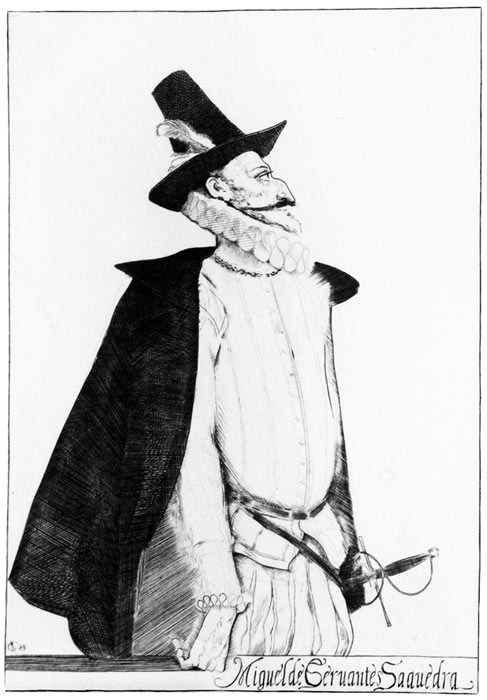
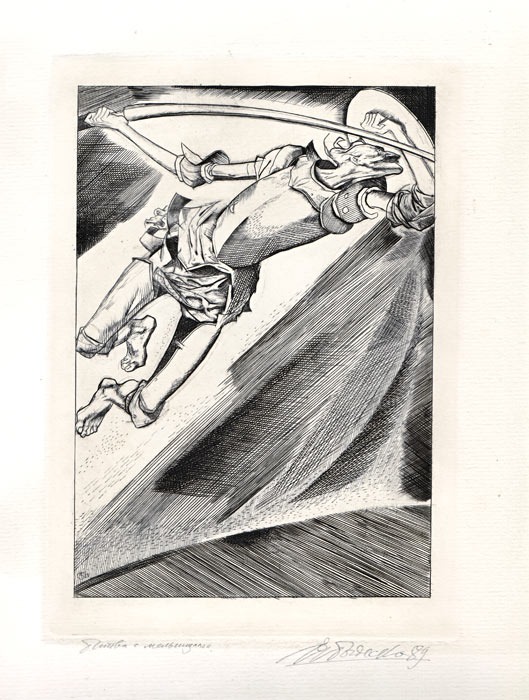
But I. Bogdesko still continues to illustrate for himself his favorite work, Cervantes’s “Don Quixote.”
MEETING VI
The “Bogdesko-75” Exhibition
In April 1998, it was planned to celebrate I. Bogdesko’s seventy-fifth anniversary in Chișinău. By that time, he was already living in St. Petersburg. I proposed developing the exhibition’s style, which included, first and foremost, the logo and emblem of the celebration, the poster, catalog, invitation card, etc. The design had to be completed before the maestro’s arrival, then everything had to be approved upon his arrival and printed during the preparation of the exhibition display.
I decided to find a drawing for the visual sequence that was expressive and characteristic of Ilya Trofimovich’s work. Very quickly, I settled upon a monumental figure from the illustrations for V. Alecsandri’s work “Master Manole,” provisionally entitled “Man with a Maulstick.” He gave the impression of moving forward, personifying the road in art that I. Bogdesko always sought. Then I enlarged the monogram with which the artist signed his works or, more precisely, engraved his signature upon them. I created the numeral 75 and began combining these elements.
The requirements that the artist might present were ones I could, in principle, already anticipate. But in this work, behind the rhythmic, color and design explorations, I wanted to reveal the humanistic meaning of Bogdesko’s art. I wanted to convey the sense of a graphic artist engaged in intense searching and thought. Although the sheets he created are easy to perceive, great labor and experience stand behind them. I wanted to convey the laconicism and contrasts of his work, whether a pen opus, an etching or a sepia drawing. I understood that the exhibition’s style had to be constructed like the characters in his graphic cycles, which seemed not yet to have had time to come to rest and were only completing their movement. I embodied all these reflections on the plane, printed them out and, by the time Ilya Trofimovich arrived, laid everything out on a large table.
He examined everything very carefully, studied it meticulously and, smiling, said that he was satisfied with everything. Forgetting my age, I once again felt like a schoolboy standing before his teacher. The work had succeeded, and this was visible in the expression on the face of the man whose anniversary was being celebrated. Neither the catalog, nor the poster, nor any other exhibition material bore my surname, and many believed that Bogdesko had brought an extremely elegant and accomplished design from St. Petersburg. This exhibition style was my gift for the maestro’s anniversary.
MEETING VII
On Calligraphy
This meeting took place in December 2005, during the maestro’s last visit to Chișinău. In the middle of a winter day, sunny in the Moldavian manner, Ilya Trofimovich entered my studio with a parcel in his hands. Having taken off his coat, he immediately presented me with a gift of courtesy (one that could only be dreamed of): the recently published book “Calligraphy,” issued in St. Petersburg. The fruit of his many years of research and writing. And the catalog of his latest exhibition. The monograph became the leitmotif of our conversation, which at times shifted to the problems of engraving and of that same art education.
Naturally, a dispute arose over the problems of contemporary creative work. Bogdesko is an artist whose work remains interesting and significant in terms of combining the Leningrad academic school with modernity. In Bogdesko’s opinion, “we do not judge today’s graphic art strictly enough. We do not analyze the real and imaginary sins of the visual arts seriously enough. There is a predominance of the formal and the abstract.”
I. Bogdesko’s creative path is unique. He succeeded in uniting within it the “High Renaissance” and the school of St. Petersburg teachers, classical engraving and a modern approach to composition. And in proving that this has the right to exist. I have had occasion to reflect a great deal upon these problems, and yet I remain an adherent of contemporary art. One cannot constantly appeal to the creative experience of masters of past years. One may draw upon them and refer to them, but one should not attempt to extract models for development and imitation. By following this path, we will miss another precious opportunity - to look into the future of art, to investigate new, still unformed artistic phenomena that are yet destined to become universally recognized values. But these were not thoughts spoken aloud; these were reflections exchanged as equals.
I leafed through the beautifully illustrated and published book on calligraphy, while Ilya Trofimovich reflected aloud: “The art of handwritten script of old and modern times, its aesthetic charm, is perceived by us as a source of inspiration. We all drink from this unclouded spring. This priceless heritage is the only professional school for those who wish to perfect their skill. Even the most experienced masters turn to it for knowledge and refined taste. Nature endows many with a special sense of the ‘beautiful letter,’ with the ability to feel lettering subtly. These people are not indifferent to handwritten script. Their dream becomes this beautiful and astonishing world - calligraphy.”
I listened and thought that all this should be heard by a large audience, by beginning and experienced artists. The illustrations included in this publication could have been reproduced by the master’s hand in a master class conducted by him. But, to put it mildly, we do not practice this. That is precisely why we have such advertising artists, on whom the aesthetic face of our cities largely depends. And such illustrators of children’s literature, who shape the worldview of our children...
We drank tea and examined my lettering opuses. It was important for me to see and, even more importantly, to hear the opinion of so demanding a viewer. I showed series of works: “Literature and Music,” “Composers and Poets,” “Calligraphy and the Letter.”
I explained that each sheet was a kind of message, messages-characterizations united in a cycle not by an external subject, but by an internal structure. And suddenly, from among the large number of works, a bronze relief monotype bearing the name of the Italian composer “Corelli” remained in his hands for a long time. He examined it at length, now bringing the composition closer, now moving it farther away, and then quietly said that one could sense in the works the movement of the artist’s hand, the pressure of brush and pen united in the conceived composition. The cycle was professionally constructed, united by the sheet format, manner of execution and imagery. Looking once more at the same “Corelli” sheet, he said gently and insinuatingly: “The ability to work with a broad-edged pen accords with the historically established traditions of the art of handwritten script. It is the simplest, most accessible and universal calligraphic instrument. With the aid of this uncomplicated implement, the distinctiveness, legibility, expediency and beauty of calligraphic writing have been formed over more than two thousand years.”
We examined engravings and the postcard edition “Old Chișinău” and marveled at what the city had been like and what architectural structures had existed there, which, unfortunately, have not survived.
That day we visited the “labyrinths” of calligraphy and engraving, education and architecture. And it was evident that Ilya Trofimovich had preserved an artist’s fidelity to his convictions and principles, to realistic traditions and to the richness of world heritage. He still displays a keen interest not only in creative explorations, but also in everything around him. The artist succeeded in saying a weighty word in graphic art and calligraphy. It is - a word of continuity between the academic school and contemporary visual art. It is - a word of movement from the past to the future.
As he was leaving, he invited me to the presentation of a unique edition that he had brought with him - the fruit of ten years of reflections and searches, experiences and disappointments. It is - a handwritten book with original engravings, “Don Quixote” by the Spanish classic Cervantes.